
Actually Private Messages.
Privacy is something a lot of us desire more and more these days, whether that's from the government, big tech companies, or simply friends and family. One way this has manifested is in the arrival of private messaging features, or even entire services based on the premise of privacy. These features can include disappearing messages, hidden modes, and others. One notable exception is Apple. My opinion is that they should get in on the race…
Why not? Apple is a company that has built its brand and reputation on privacy and security, and as the years go by, its omission of features that make iMessages truly private becomes more obvious. While iMessage itself has always been end-to-end encrypted, its quite hard to make sure the right recipient and only they, can read the message. "But what about the existing features?" you might ask…
This is where Apple can come in. They have the advantage and ability to shake things up since they have a popularly used messaging platform, a tight approach to data privacy, and the capability to roll out new features quickly and to a wide user base. Here's how they could approach this…
Similarly to the existing "Hidden Apps" feature in the App Library, I thought of a button in the app's filter menu that could open a hidden view after authenticating.
After a lot of deliberation on how to keep Private Messages as discreet as possible, I was reminded of the Action Button on iPhones, the small user-configurable button on the side. What if that could be used to open a private view?
Ultimately, I decided it wasn't the way to go. It works fine enough, but I didn't like how conspiuous it was, and I could see a scenario where somebody could coerce or otherwise force a user to show their Private Messages.
The setup flow is relatively simple: once the user decides to enable the feature, the iPhone randomly generates a random but easy to press pattern that activates Private Messages. They can then add contacts to use the feature with.
Once setup, the user can receive discreet notifications in the form of a bubble and the sender's initials, and open Private Messages by pressing their custom Action Button pattern. As a safety measure, tapping anywhere outside of the Private Messages bubble will cause it to abruptly disappear with no animation.

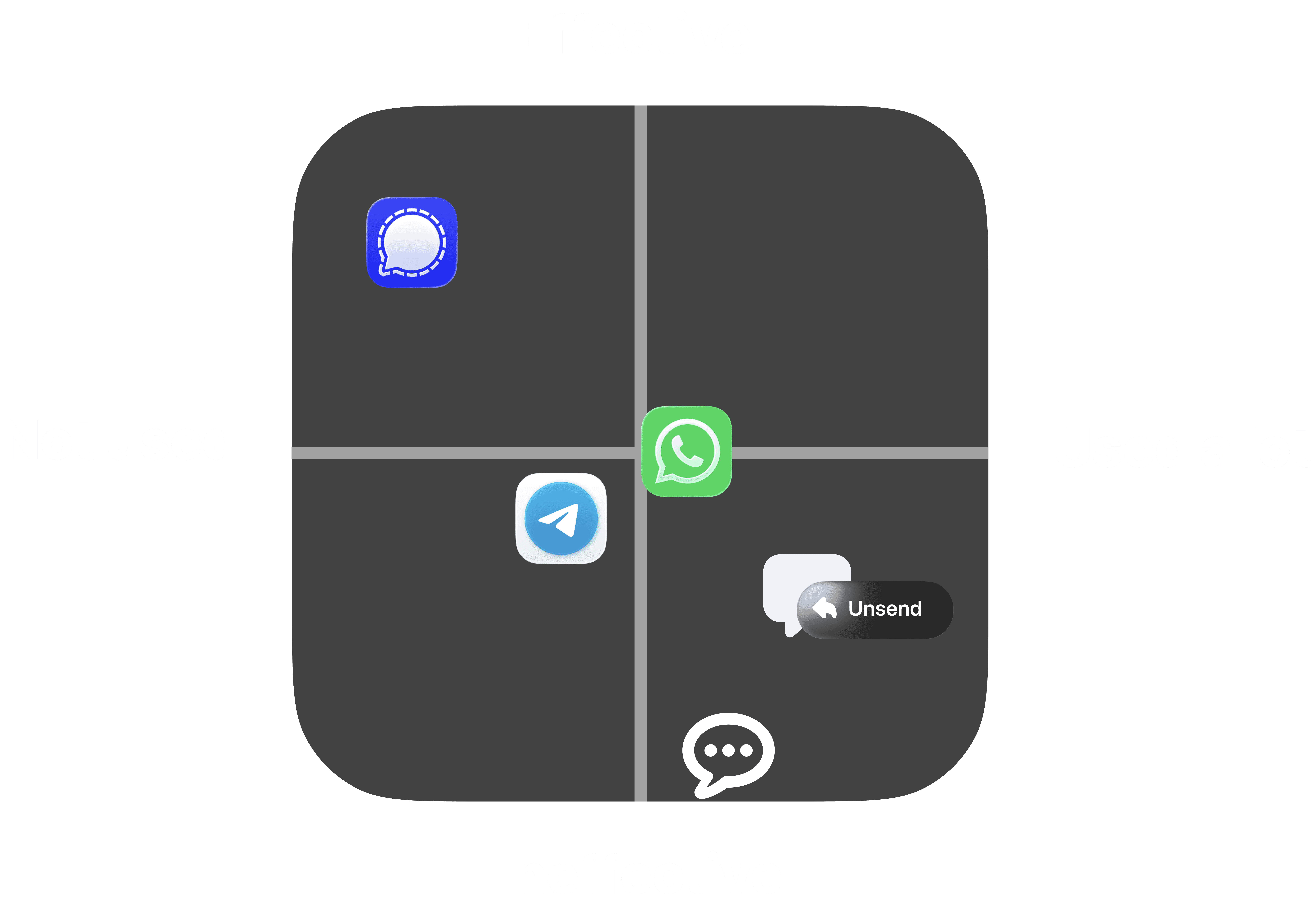
A general summary of where things currently are at.
Why?
Invisible Ink
Initial idea
Chosen idea
Secret mode
Action Pattern
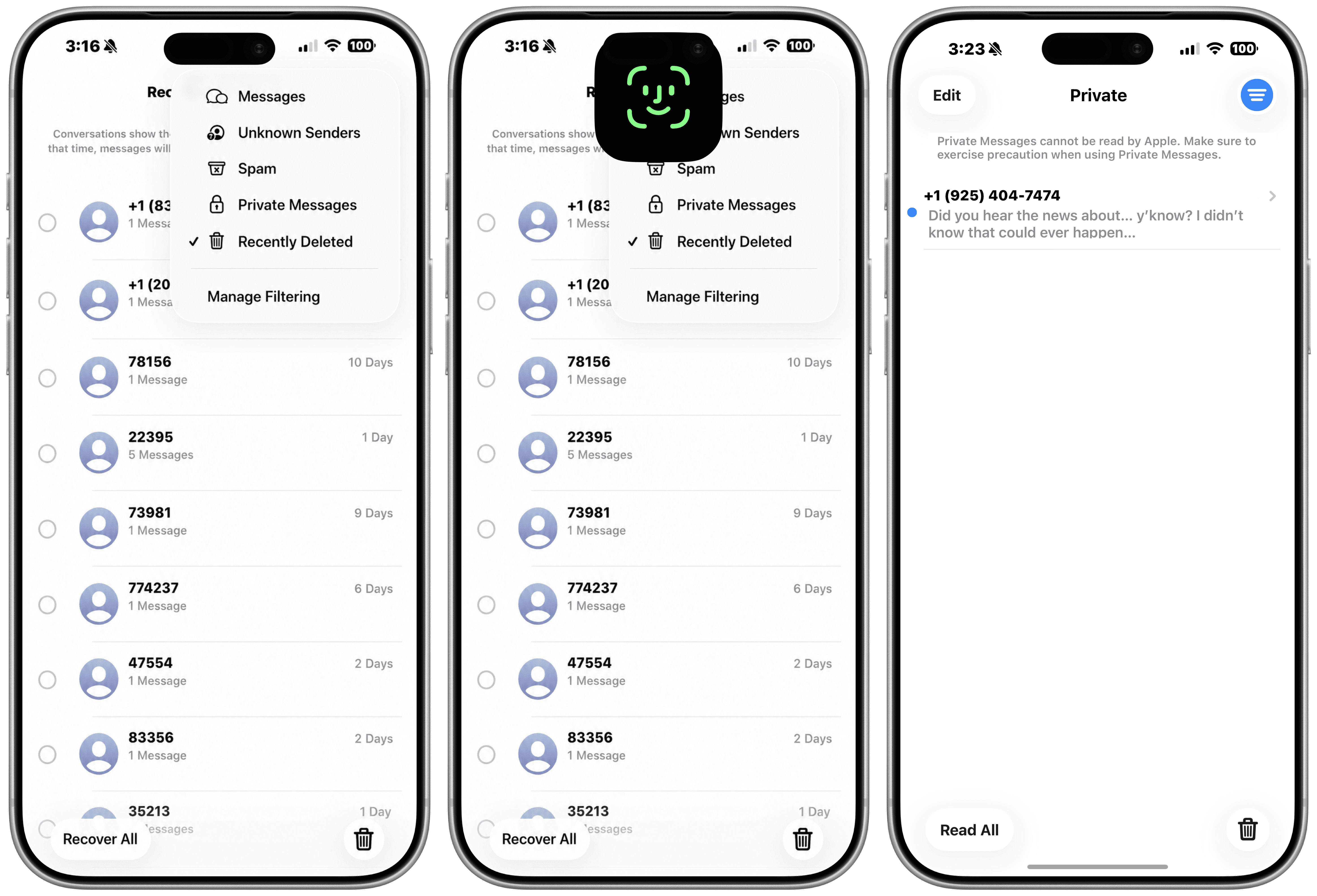
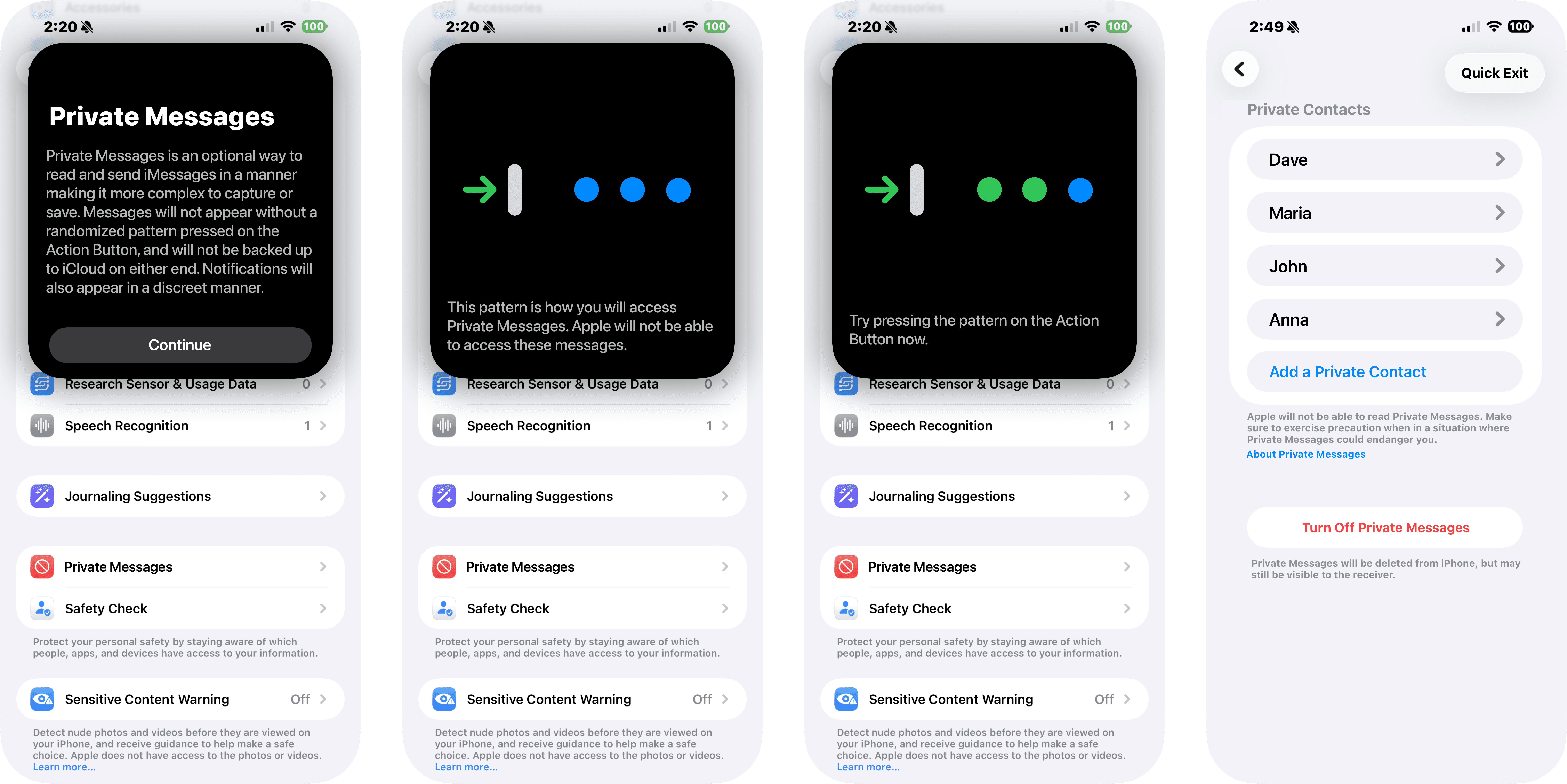
As shown above, the new Private Messages feature fixes the problem that the current features have, without the limitations of third-party applications. It's easy to learn and activate, but only if you know the random pattern. This helps not only with people sharing an embarassing secret, but also people in abusive situations.
Outcomes
Created list of drawbacks of current approaches
Tried multiple approaches and created full setup flow
Designed intuitive method while keeping with Apple's UI style and animation style
Introduced in 2022, iMessages can now be unsent and/or edited for a limited time after sending. (up to 2 minutes for unsending, and up to 15 minutes for editing). Beyond the fact that a user might exceed those limits, an iMessage's edit history is always visible for anybody in the conversation.
Apps like WhatsApp, Signal, Telegram, and others have features that can make chats more private, but they always have a big caveat that makes them not a viable option. For example, WhatsApp is owned by Meta, a company known for its privacy scandals, Signal is very niche, and Telegram does not encrypt messages by default. Also its a pain to install yet another app.
Unsend/edit message
Third-party apps
A short demonstration of the feature.
Invisible Ink is a feature where you can make an iMessage undecipherable until someone swipes on it. Not to be Captain Obvious, but there is nothing stopping somebody else from swiping and reading the message. Neat party trick, but not really meant to keep chats secret.